Words: Robby Pacicco / Photos: Courtesy of Frank Marino
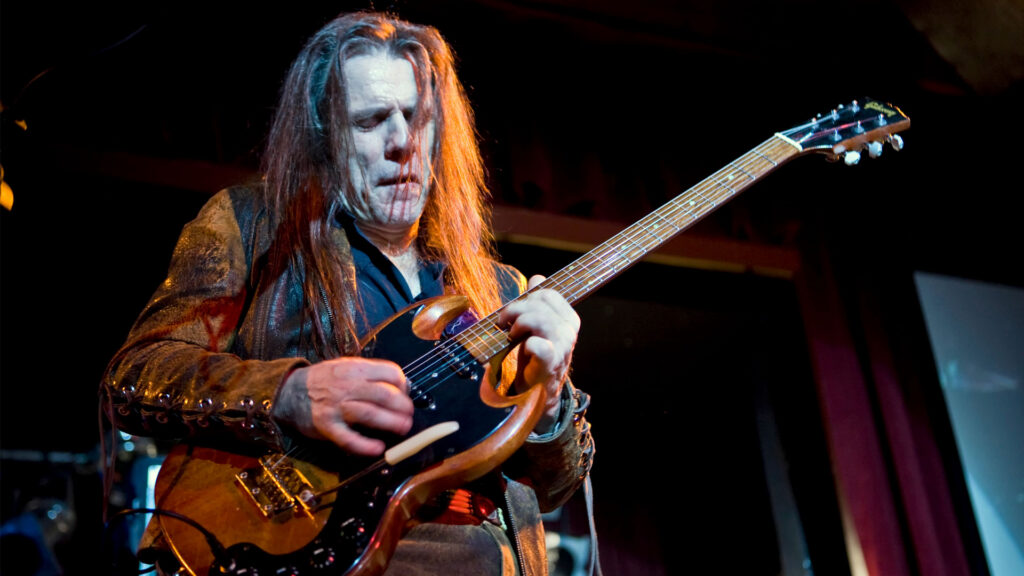
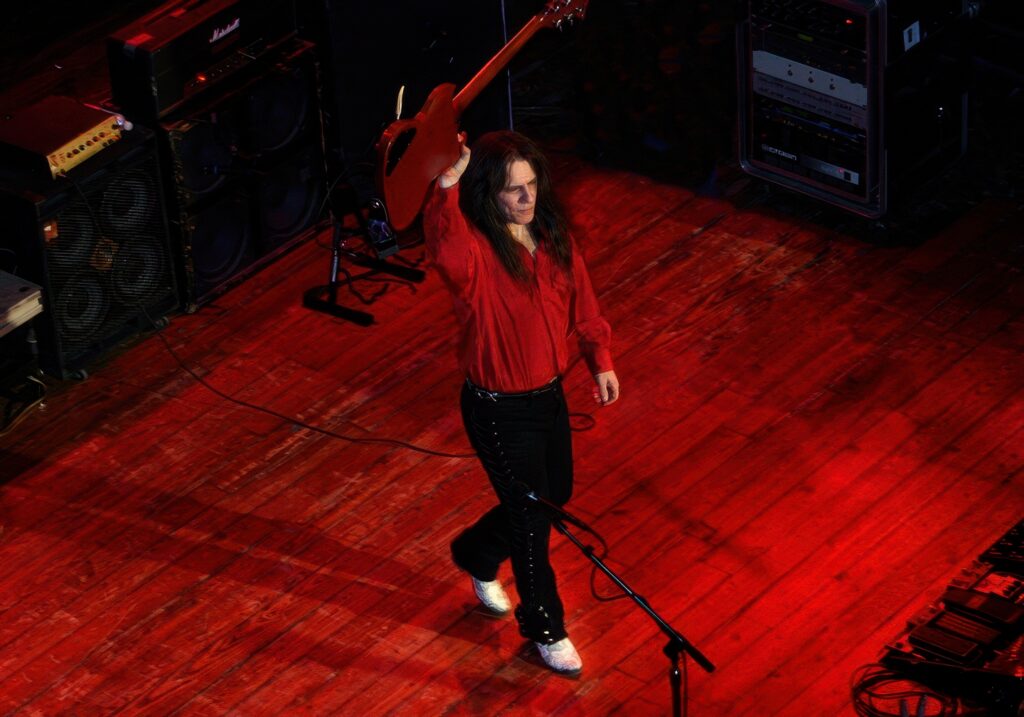
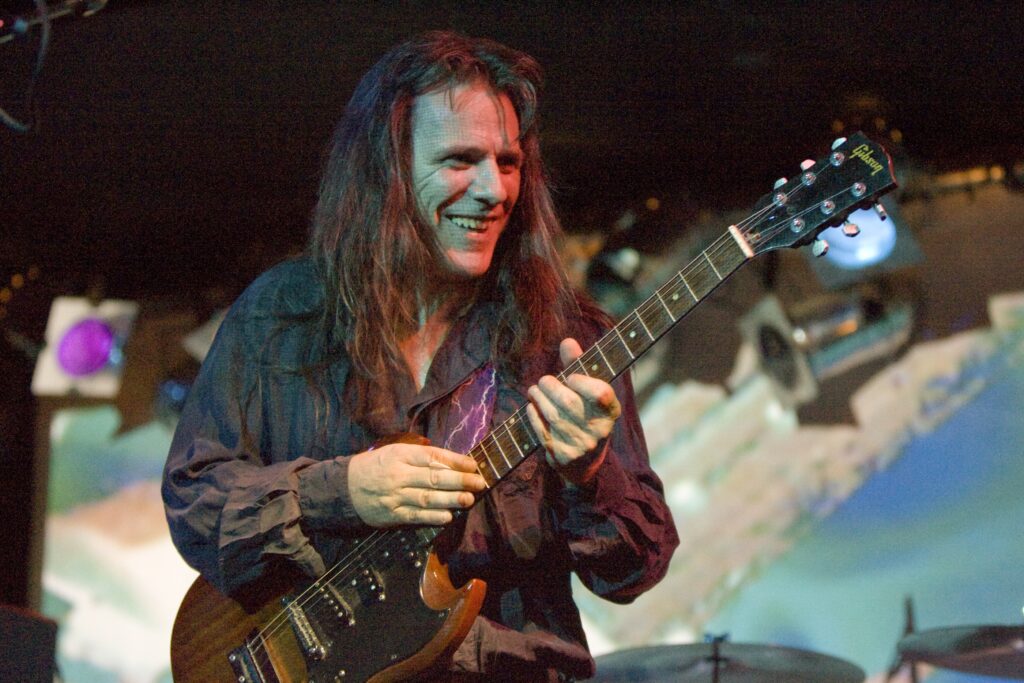
For anyone fortunate enough to have experienced the absolute greatness of Canadian born guitar god Frank Marino and his epically poetic named band Mahogany Rush, congratulations for having some of the most blessed ears throughout recorded human history. Born in Montreal, QC, Canada, a city known for its magnificent diversity, multi-cultural and Euro-NYC vibes, the universe manifested a musical virtuoso when Frank Marino joined this realm. Known for his signature tone felt throughout his entire music catalog which include audible masterpieces such as Stories of a Hero, Dragonfly, Strange Dreams, and Poppy; as well for his very own renditions of celebrated rock and blues classics from other artists. His fans and appreciators can go on for days discussing his hypnotic tone, precision and artistic prowess as a musician, songwriter and live performer. Marino, however, is not only a master but a continuous student of his own passions. His career as a showstopping studio and stage guru are simply just part of a life filled with passions running in parallel chords. In music, the definition of “parallel chords” is a sequence of chords sharing the exact same internal intervals and expression. Which is why Frank Marino the musician is also Frank Marino the gearhead and Frank Marino the racer, exhibiting the parallel chords within his own life.
It’s well documented how Frank started his musical journey as a developing and promising drummer, eventually transitioning into what he is worshipped for today, wielding a guitar and soulful singing voice. What not many people are unaware of however is Marino’s infatuation and knowledge of the automobile and drag racing. To his own recollection he’s owned close to 50 cars, ranging from a Ford Pinto to a Detomaso Pantera. “The first car I ever got was a Firemist Green 1970 Pontiac GTO convertible, I was only about 18.” says Frank, “Unfortunately,” he continues while chuckling, “that only lasted six weeks! I crashed it on the highway because I was running slick tires and it was pouring rain. But I was very determined to immediately to get another car.” Recounting on how lemons quickly turned into lemonade while staring at his demolished heap, “The guy who sold me the GTO just happened to be driving by and saw me and the wrecked GTO on the side of the road. He would bring me to get another car. I ended up getting a Chevrolet Camaro Z/28,” he explains, “and that’s when I really fell in love with Camaros and soon big block Chevys.” It’s around this time where a young Frank Marino would start doing what all the other cool gear heads with youth, bravado and horsepower fueling them did at the time; street racing. The 1970s and early 1980s in Montreal was a different time, much like Detroit or Los Angeles. The streets were a proving ground, a colosseum filled with tire smoke, exhaust fumes and shattered egos. He’d never encourage it today and admits it was a different era and footnote in time. The risks and stakes were high, but it was an accepted social norm back then. Obviously not legal, just… well, for the lack of better words, it was irresponsible and dangerous. “I started learning more about cars and engines because one day I brought my car to this shop, right,” recounts Frank, “and the guy there running the place was extremely rude, condescending towards me! He would tell his team or staff not to waste their time with me because I didn’t know anything.” Essentially, this is the point where the sparkplug ignited Frank. What people must remember is that Frank Marino is a self-taught musician. Trial, error, experience, motivation and desire were the formula to a successful career as a professional guitarist, singer, songwriter and performer. That same formula is etched into his automotive and racing life. “I was motivated at that point to learn everything and anything there is to know about cars and engines. Building them, tweaking them, reading books, everything. It took a few short years, but I eventually learned it all.” Frank gained a reputation in the city of Montreal with his powerful Chevrolets. Playing his six strings on stage while racing his eight cylinders on the streets, Marino was a force not only in musical octaves but with high octane as well. “My green 1972 Camaro,” smiled Frank before pausing for a giggle, “it was green and red actually and it really went, man! The car looked like absolute crap, but it sure did go! At some point it was a 503CI stroker, with a Teflon blower, 65% overdriven equipped with nitrous oxide. Oh yeah, that was a fast car.”
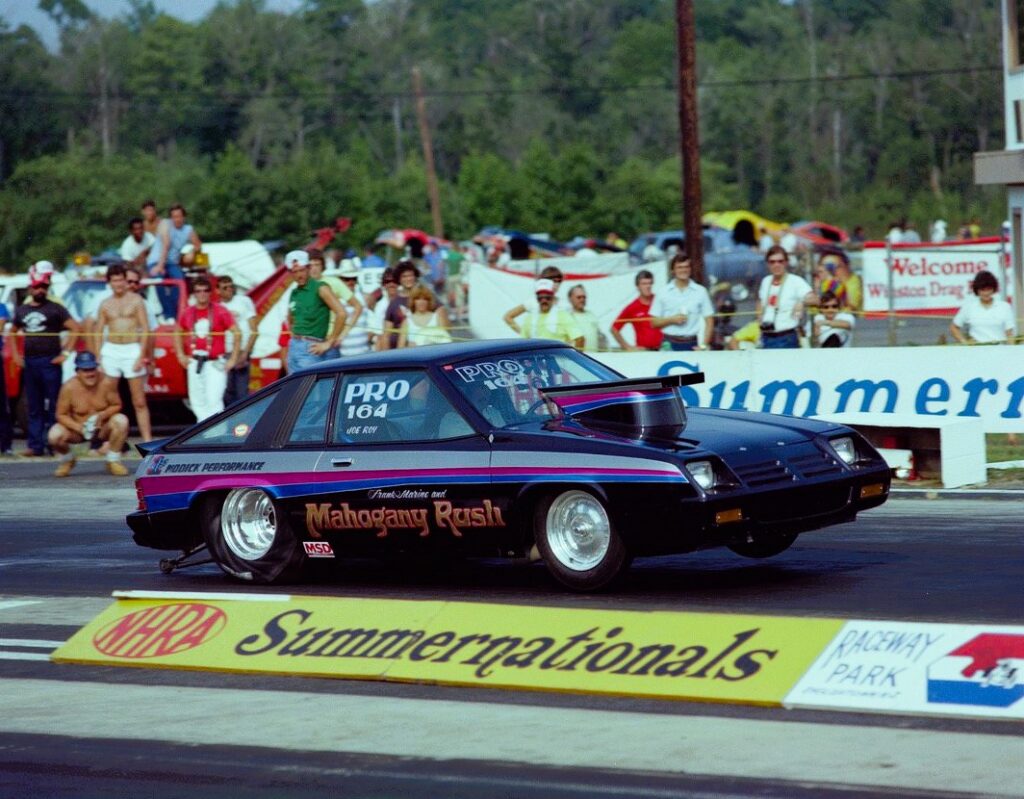
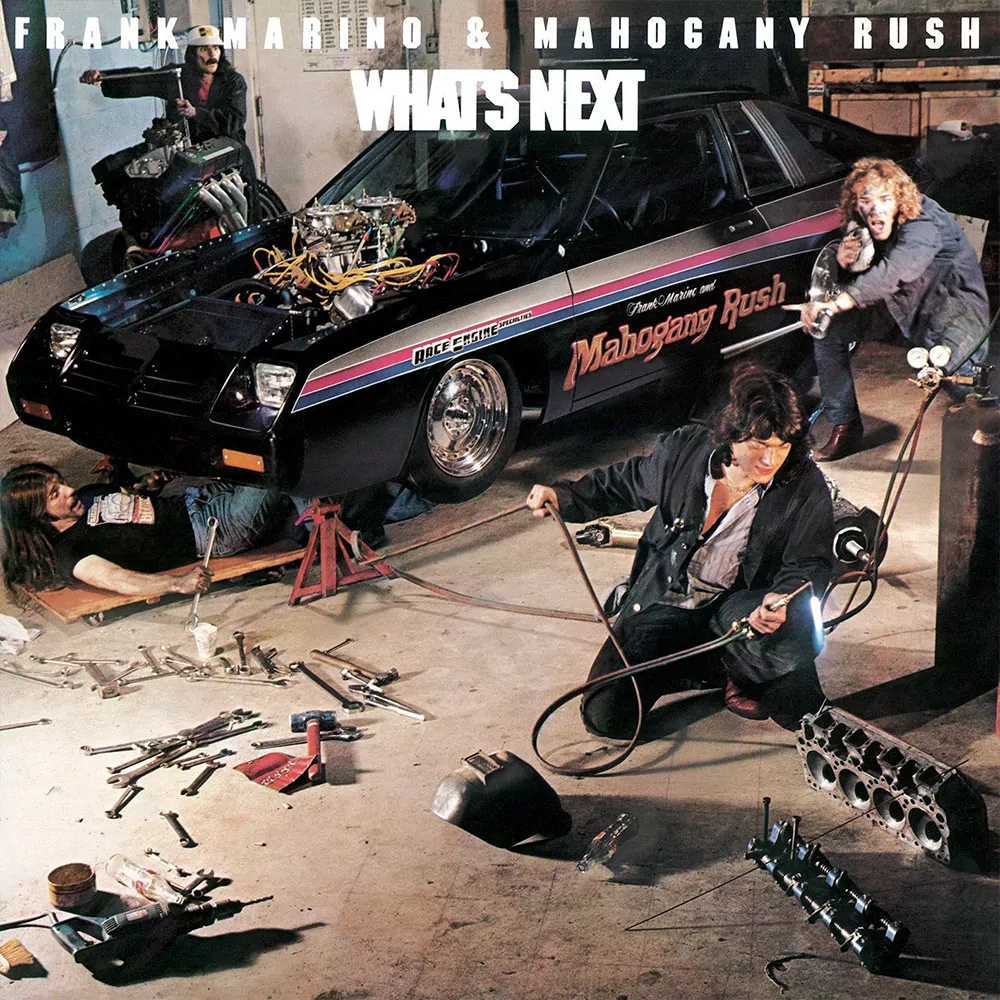
Somewhere along the way Frank gained access to a full garage where he’d sharpen his skills, properly. “I knew quite a bit about cars after some time street racing, so I decided to go pro. I learned a lot, hanging out with people who knew what they were doing. I gained so much from their experience and applied it to what I was doing.” Fans of Frank Marino & Mahogany Rush will automatically know what comes next, or more specifically what’s next. Correct, this is in reference to the album cover from Frank Marino & Mahogany Rush titled What’s Next? featuring his very own 426CI Hemi powered Dodge Omni Pro Stock. Yes, a Hemi in an Omni. The car was named Mahogany Rush for obvious reasons. Frank started to prefer building the engine and car much more than racing it, so now, not only a producer in the music studio, but he was also one at the drag strip. “That car was special, it was something. I started really enjoying just working on the car and getting it up and running instead of racing it.” Frank handed over his trust in racing the Mahogany Rush Dodge Omni to Joe Roy. “I remember” laughs Frank,” I’d be in the studio sometimes and the guys were recording their parts, and I’d be in there just working on my engine! Tearing it apart or piecing it back together but always paying attention to the work being recorded for the album. Then when I’d have to record my thing, I’d have to forcefully pull myself away from the engine, do my part as best I could so I could get back to working on the engine again as fast as possible!” All his determination and hard work in the studio, whether it be recording tracks or working on his engine paid off. His passion for music wound him on stages all over the world while his passion for the cars had him in the winner’s circle.
Alas, a difficult decision between racing and recording/performing needed to be made. The ever-growing cost of competing a professional race car and crew was hard for Frank to justify to himself, eventually focusing solely on his music career. “I can’t say it’s a regret, but it was necessary at the time. I loved it all.” He continues to explain, “Racing at any level is very expensive.” Without jotting down the complete minutia such as repair costs, parts, maintenance, crew salary, travel expenses etc… pro racing requires a specific financial stamina and is only worth continuing if there is any respectable amount of profit. Sometimes, passion just isn’t fuel enough to keep the metaphorical, or in this case literal machine running. In the end, it’s still an incredible win as his impressive catalog of studio and live performances have been inspirations to so many, including notable musicians like Joe Bonamasa, Zakk Wylde, Marty Friedman, Steve Vai and so many more.
Frank Marino is not the only professional musician and recording artist out there bitten by the automotive bug (not referring to the Volkswagen). He is however one of the rare few that could piece a performance car and engine back together without missing a note. It’s only expected from a man who is no simple child of novelty, but a juggernaut with a guitar or a wrench. In this strange universe where tales of the unexpected happen everyday, Frank shoots from the hip with perfect precision and isn’t afraid to immerse himself into the eye of the storm as he always has. The Canadian icon and gentleman may no longer be terrorizing the streets and strips with his cars, but the air and sound waves are forever vibrating with a different type of power he created. He may not have known it at the time, but when Frank shifted gears to focus fully on his music, he made sure every listener was now just like Joe Roy in his Omni. Except instead of the vehicle being a monster race car, the ride was experienced through elaborate music compositions and performances. Frank had traded horsepower for volume, asphalt for the stage, and the roar of an engine for the roar of the crowd. So, coming full circle, the truth is the ride never ended and more importantly, it never ever will.